
About Root Healing
Iboga built its own container. We work inside it.
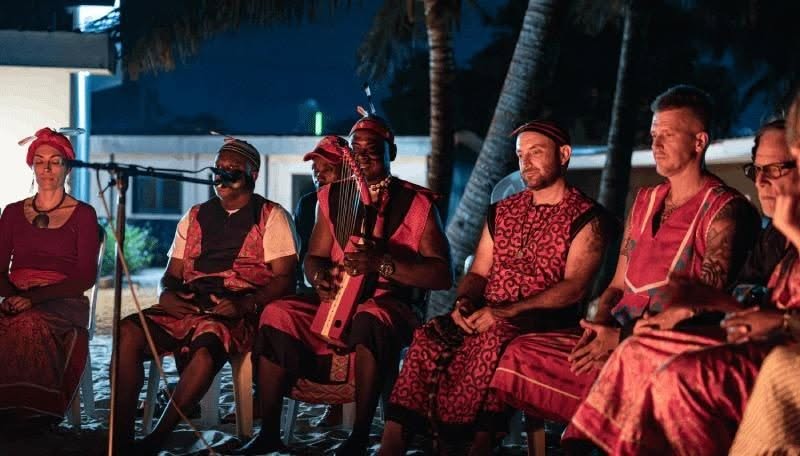
Most providers try to fit this medicine into clinical frameworks that don’t work well on their own terms — and work even less with Iboga. We take the opposite path. Bwiti is the language Iboga speaks, and rather than impose a model, we shape our programs around what Iboga and the tradition have already made whole.
One belief sits at the center of everything we do: safe and holistic is not a trade-off
Contact usNearly 7 years
Of consistent retreats
1,000+
People held directly
Missoko
Initiated and lineage-empowered
BLS & ACLS
Certified team, cardiac monitoring
Our purpose
Root Healing exists to set the global standard for Iboga retreats that are safe, effective, and true to the tradition the medicine comes from.
Our aim is simple: that those who are cleared and called to work with Iboga can do so inside a container that actually holds them, and receive the level of care that both the medicine and the person deserve.
Who we are
Grounded people, rooted in ourselves
We are people who have healed with Iboga ourselves, and in that process we remain grounded in the way we meet life and rooted in ourselves. So you can expect genuine people who focus on you and on supporting you in your work — rather than reassuring their own insecurities by establishing hierarchies and importance.
We know who we are, and we want to help you know yourself too.
It's not about us.
Our Values
Tradition
We are initiated into the Missoko Bwiti tradition, and lineage-empowered by our Bwiti elders in the long-standing healing lineage around Iboga and its wisdom of care. It matters to us that we follow traditional Bwiti practices when working with Iboga.
We are not clinicians deploying a protocol. We are a lineage-empowered team holding the container we were once held in.
Safety
A first-order priority, not a compliance exercise. Every guest goes through an extensive, thorough medical intake and review led by our medical team, including comprehensive cardiac and contraindication screening before arrival.
Our staff hold clinical emergency certifications — including BLS and ACLS, the advanced training for managing cardiac and other life-threatening emergencies. On site we run the most advanced EKG monitoring and defibrillation equipment available, on a professional cardiac-monitoring platform configured specifically to the demands of Iboga work rather than left on generic default settings.
Monitoring is sustained before, during, and after each ceremony
Our core reframe
Tradition holds the healing. Medical rigor holds your safety. Neither is ever compromised for the other — and we don't accept that safe and holistic are a trade-off.
Study
The Bwiti tradition is the study of life itself, and that is our leading philosophy. We are committed to being constant students — of this work, of ourselves, and of the field as it develops. We learn through our own research programs, scientific publications, updated protocols, ongoing training, and collaboration with other professionals.
That study is not separate from how we keep people safe. Our teams train continuously, and we hold a standing group of medical, traditional, and other experts around every retreat — through preparation, ceremony, processing days, and integration.
Equitable access
Cost is the most common reason someone who needs this work never does it, and we treat that as our problem to solve rather than an unfortunate fact of the market. Three routes exist for people who cannot meet the full contribution.
Scholarships, administered through our nonprofits.
The Last Minute List, for people who can travel on short notice when a space opens.
Committed community spaces, at reduced contribution for people who take part in our ongoing community.
We would rather run a retreat at a smaller margin than run it without someone who was ready.
Reciprocity
Our elders in Gabon are our direct partners. They are involved in everything we do and everything we develop — not consulted after the fact, and not recipients of a percentage.
We also practice the art of listening — the first thing children are taught in Gabon. We don't arrive with a plan for what Gabon needs. We ask, and then we do what we're told is needed.
How this relationship works in full
Our team
The people who hold the container
The same people who screen your health hold your ceremony and walk with you through integration. There are no handoffs between departments.
Giuliana Rivero
Facilitator and Manager of Mexico Center
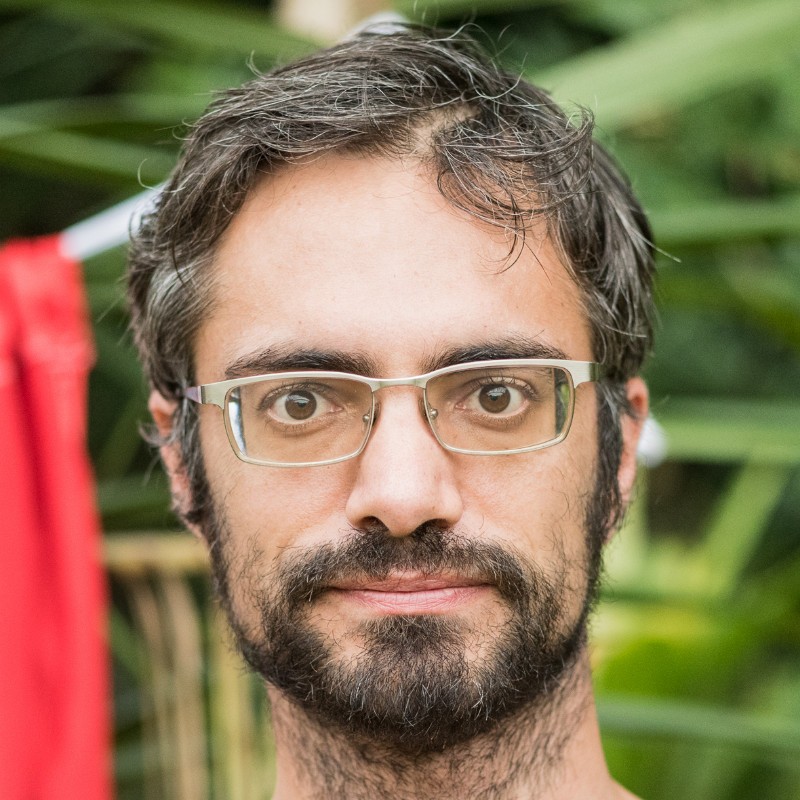

Megan Hu, PhD
Neuroscience Advisor